
The North Guide
Northern Pakistan is where the earth meets the sky in the most dramatic way possible. Home to the intersection of three legendary mountain ranges: the Karakoram, the Himalayas, and the Hindu Kush, this region is a spectacular tapestry of jagged, snow-capped peaks, high-altitude deserts, turquoise lakes, and deep-rooted cultures.
Whether you are seeking extreme adventure, ancient history, or a peaceful escape into alpine valleys, this introductory guide will give you a sense of what to expect from Pakistan's mountainous north.
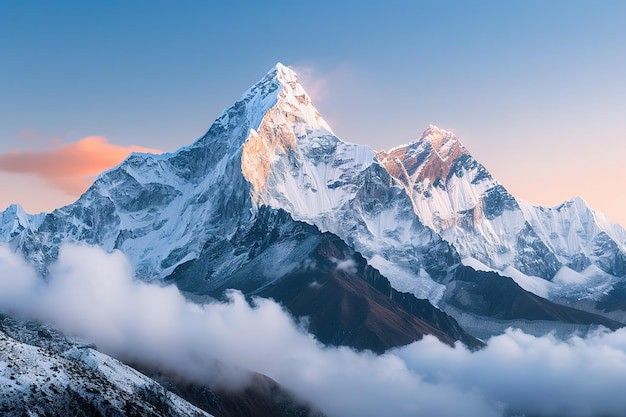
This is the ultimate destination for massive peaks, glaciers, and high-altitude valleys.
Hunza Valley: Famous for its soaring poplars, ancient terraced fields, and incredibly high literacy and longevity rates. It is home to the dramatic Passu Cones and Attabad Lake, a striking turquoise body of water formed by a landslide.
Skardu & Baltistan: The gateway to K2 and the Karakoram’s highest peaks. It features a surreal landscape where the Katpana Cold Desert meets snow-covered mountains, alongside the high-altitude plateau of Deosai National Park.
Fairy Meadows: A lush alpine meadow right at the base of Nanga Parbat (the world's 9th highest mountain). Waking up here gives you an uninterrupted, jaw-dropping view of a massive 8,126-meter ice wall.
The Main Hubs & Regions
1. Gilgit-Baltistan (The Heart of the Giants)
Connectivity: Major mobile networks from the south don't always work seamlessly in Gilgit-Baltistan. Your best bet is to pick up a local SCOM SIM card once you arrive in Gilgit or Hunza for reliable data and signals.
Road Conditions & Flexibility: The Karakoram Highway (KKH) is a marvel of engineering, but mountain travel is always subject to weather. Always build a "buffer day" into your itinerary in case of minor landslides or weather delays.
Cash is King: While ATMs exist in larger towns like Gilgit, Karimabad, and Skardu, remote valleys operate almost entirely on cash. Keep plenty of local currency (Pakistani Rupees) on hand.
Respect the Local Norms: Northern Pakistan is deeply hospitable but culturally conservative. Dressing modestly (covering shoulders and knees for both men and women) is highly appreciated, and it is polite to ask permission before photographing local people, particularly women.
Essential Tips for First-Timers
Characterized by roaring rivers, dense pine forests, and rich historical crossroads
Swat Valley: Often called the "Switzerland of Pakistan," Swat offers a mix of emerald rivers, pine forests, and a fascinating history as an ancient center of Gandharan Buddhist civilization.
Naran & Kaghan Valley: A highly popular, accessible summer route famous for alpine waters like Lake Saif-ul-Malook, legendary for its local fairy folklore.
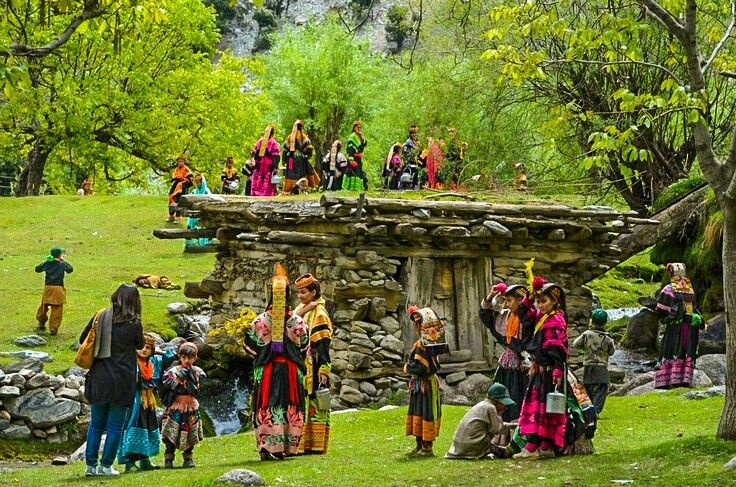
Chitral & The Kalash Valleys: Tucked into the Hindu Kush, this area is home to the Kalash people: a distinct, indigenous community with unique polytheistic traditions, vibrant traditional attire, and lively seasonal festivals.
2. Khyber Pakhtunkhwa (Lush Valleys & Hidden Cultures)
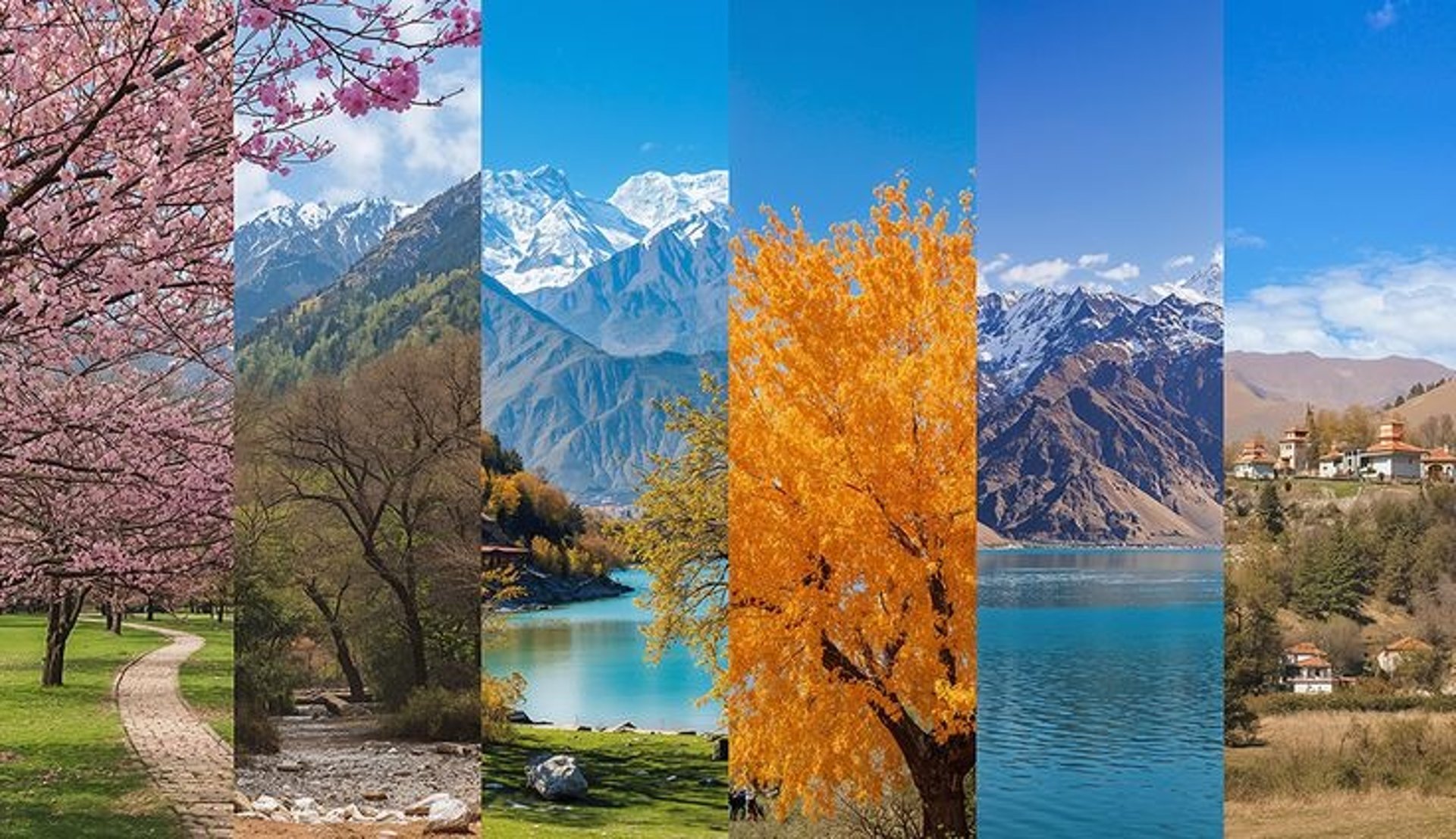
The timing of your trip will completely transform your experience. Because of the high altitudes, winter closes many mountain passes, while spring and summer bring the landscapes to life.
Spring | March - April
Crisp air, Blooming Apricot and cherry blossoms covernign the valleys. Best for Photography, cultural walks, lower crowds.
Summer | May - August
Lush Green Meadows, completely clear roads , and roaring glacial rivers. Best for HIgh-altitude trekking, (K2/Nanga Parbat) camping.
When to Visit: The Four Faces of the North
Autumn | September - October
Valleys turn into a brilliant sea of gold, orange, and fiery red poplars. Best for, Landscape photography, Hunza & Skardu road trips.
Winter | November - Feburary
Heavy snow, freezing temperatures, and quiet, snow-capped isolation. Best for, Winter sports (Malam Jabba skiing), seeing frozen lakes.