
Beyond the Peaks: A Guide to Khyber Pakhtunkhwa’s Lush Valleys & Hidden Cultures
When most people picture Pakistan’s northern landscapes, they imagine the towering, stark fortresses of the Karakoram. But if you turn your gaze toward the northwest, into the heart of Khyber Pakhtunkhwa (KP), the ruggedness gives way to something entirely different: endless blankets of alpine green, rushing turquoise rivers, and pocketed valleys holding ancient cultures found nowhere else on Earth.
When most people picture Pakistan’s northern landscapes, they imagine the towering, stark fortresses of the Karakoram. But if you turn your gaze toward the northwest, into the heart of Khyber Pakhtunkhwa (KP), the ruggedness gives way to something entirely different: endless blankets of alpine green, rushing turquoise rivers, and pocketed valleys holding ancient cultures found nowhere else on Earth.
Whether you are looking to lose yourself in alpine meadows or trace the footsteps of centuries-old traditions, this travel guide covers the absolute essentials of KP.
The Epicenters of Green: Swat & Kaghan Valleys
KP’s valleys are famously lush, nourished by melting glaciers and heavy seasonal monsoons that turn the mountains into vertical meadows.
Swat Valley: "The Switzerland of the East"
Historically a center of ancient Buddhist civilization, Swat is a masterpiece of rushing rivers and orchards.
Don't Miss: Mahodand Lake. Accessible via a rugged 4x4 ride from Kalam, this glacial lake is surrounded by dense pine forests and wild meadows.
The Vibe: Energetic riverside towns turning into tranquil, misty alpine heights as you drive further north.
Kaghan Valley: The Gateway to the Clouds
Running parallel to Swat is the Kaghan Valley, a dramatic gorge carved by the Kunhar River.
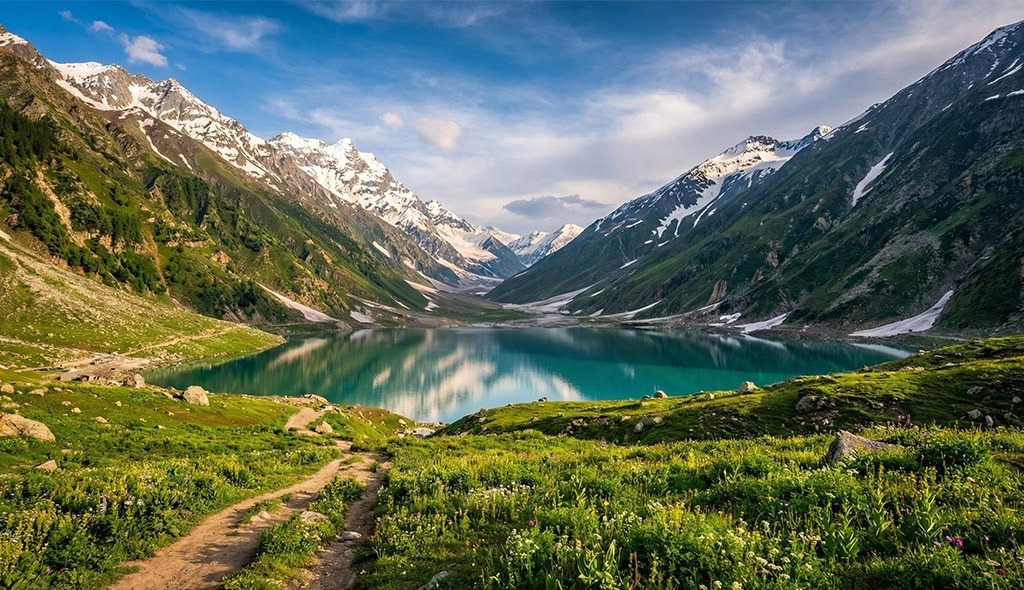
Don't Miss: Saif-ul-Muluk. Sitting at over 10,000 feet, this legendary lake mirrors the snow-capped peak of Malika Parbat. Local folklore says fairies descend to the lake on full moon nights.
The Vibe: True high-altitude drama, dramatic cliffside roads, and crisp mountain air.
Tucked away in the Hindu Kush mountains near the Afghan border lies Chitral, home to one of the world's most unique cultural enclaves: The Kalash People.
Unlike the surrounding Pashtun populations, the Kalash are an indigenous minority who have preserved their distinct polytheistic religion, unique language, and vibrant way of life for thousands of years.
Experiencing Kalash Culture
The Kalash live primarily in three remote valleys: Bumburet, Rumbur, and Birir.
The Attire: Kalash women wear striking piran (long black dresses) heavily embroidered with bright threads, paired with kupasi, ornate cowrie-shell headdresses.
The Festivals: Life here moves to the rhythm of seasonal festivals filled with rhythmic dancing, drumbeats, and local wine. The major celebrations include Chilam Joshi (Spring, mid-May), Uchal (Autumn, August), and Choimus (Winter solstice, December).
A Note on Etiquette: The Kalash are incredibly welcoming, but their valleys are not a human zoo. Always ask for permission before taking photos of individuals, respect their sacred altars (where outsiders are often restricted), and support the local economy by buying handmade crafts directly from the artisans.
The Hidden Culture: The Kalash Valleys of Chitral
The Quick-Reference Planner
Swat valley: May-October: Families, Hikers, Foodies, Eating fresh trout by the Swat River in Kalam
Kaghan Valley: June – September: Adventure Seekers, Photographers, Watching the sunrise at Lake Saif-ul-Muluk
Chitral & Kalash: May (Joshi) or Sept–Oct: Cultural Explorers, Anthropologists, Witnessing the dancing circles of the Joshi Festival