
Whispers in Sandstone: The Best Travel Guide to Makli Hills
Two hours east of Karachi, the busy noise of the road disappears into a calm and stunning quiet. Makli Hill, located near the old city of Thatta, is one of the largest burial sites in the world, rising up from the Indus Delta plateau. Covering more than 10 square kilometers, this UNESCO World Heritage Site is a large "City of the Dead. "
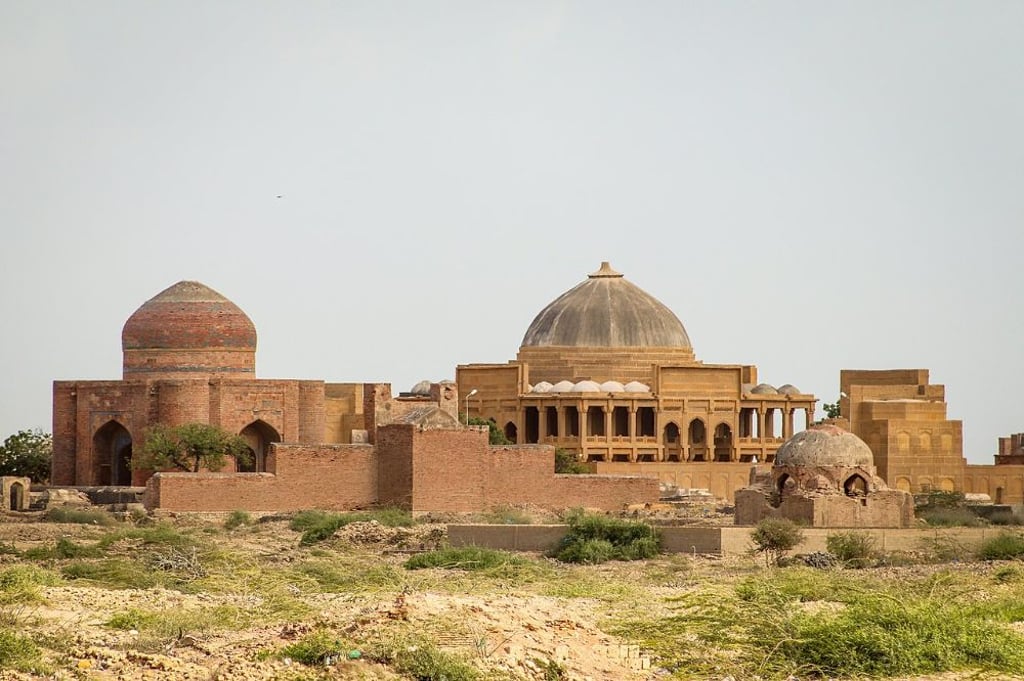
Two hours east of Karachi, the busy noise of the road disappears into a calm and stunning quiet. Makli Hill, located near the old city of Thatta, is one of the largest burial sites in the world, rising up from the Indus Delta plateau. Covering more than 10 square kilometers, this UNESCO World Heritage Site is a large "City of the Dead. " It is the burial site for about 500,000 to 1 million people. Kings, queens, holy men, scholars, and soldiers from four different families (Samma, Arghun, Tarkhan, and Mughal) are buried here. Walking through Makli isn’t just a walk in a graveyard; it’s like reading about 400 years of the best times in Sindhi history, all told through stone and colorful tiles.
The Three Stages of Architecture
What makes Makli amazing is how the buildings change as you walk along the ridge. You are basically moving back and forth through time. The site is mostly split into three main time periods.
Sure Please provide the text you'd like me to simplify.
The Mughal Period (1592–1739 CE)
This group of buildings is near the main entrance on the south side. They are big and made of brick and stone, showing a mix of impressive Mughal style and special Persian designs.
What to find: The amazing Tomb of Isa Khan Tarkhan II (finished before 1644). It has large, multi-level galleries, big open spaces, and deep, fake balconies that look like traditional Gujarati and Hindu building styles, all made from strong stone.
The Tomb of Diwan Shurfa Khan (1638) is amazing because of its bright red brick walls and beautiful blue and green tiles. These colors really stand out against the dull desert surroundings.
Sure Please provide the text you'd like me to simplify.
The Tarkhan and Arghun Periods (1520–1592 CE)
As we go further north, this middle group connects local traditions with Central Asian changes. The carvings here become very thick. The tomb of Mirza Jani Beg is a great example of brickwork. It has different layers of shiny and dull bricks, and the joints between the bricks are so small that you can hardly see them.
Sure Please provide the text that you would like me to simplify.
The Samma Dynasty was a ruling family that existed from 1351 to 1520 CE.
At the very top of the plateau, this is where Makli's burial customs really began.
The Crown Jewel: The Tomb of Jam Nizamuddin II, who was in charge from 1461 to 1509. This square stone room is seen as the best example of Sindhi skill in crafting. Take a good look at the outer walls: the stone carvings are very detailed, which is why they are often called "lace work in stone. " The designs show complex shapes that smoothly change into images of lotus flowers, chain patterns, and small temple-like tops that really remind you of Hindu and Gujarati temple styles.
Important Tips for Your Visit
Since the site is large and open to the weather, some planning can be very helpful.
When to Go: Visit during the winter months (November to February). Summers in Sindh are very hot, and there is almost no shade on the land.
Golden Hours: Come in the early morning or late afternoon. The temperature is comfortable, and the low sun shines on the yellow Jungshahi sandstone, making the whole cemetery look like a bright, shining field of gold.
Getting Around: The monuments are far apart, so walking around the whole area can be tiring. Luckily, the site management offers electric shuttle carts for a small fee to help you travel between the main tomb areas.
What to Bring: Strong shoes for walking, sun protection (a hat and sunglasses are a must), and lots of water to drink.