
Uncovering the Living History of Northern Pakistan
When most people think of Northern Pakistan, their minds immediately drift to towering snow-capped peaks, massive glaciers, and turquoise alpine lakes. But if you look past the standard tourist viewpoints and trace the paths carved by ancient rivers, you find something far deeper: a vast, open-air museum of human history.
When most people think of Northern Pakistan, their minds immediately drift to towering snow-capped peaks, massive glaciers, and turquoise alpine lakes. But if you look past the standard tourist viewpoints and trace the paths carved by ancient rivers, you find something far deeper: a vast, open-air museum of human history.
For thousands of years, these valleys weren't just remote mountain barriers, they were the bustling crossroads of the Silk Road, where pilgrims, traders, armies, and empires left their indelible marks on the stone.
1. Chilas: The Whispering Stones of the Indus
Traveling southeast into Baltistan, the scenery opens up into the wide, high-altitude valley of Skardu. Known historically as "Little Tibet," Baltistan represents a fascinating cultural synthesis where Tibetan roots meet centuries of Persian cultural, linguistic, and religious influence.
This blend is most striking in its architectural heritage. Places like the Shigar Fort (Fong-Khar) and the Khaplu Palace show a beautiful integration of Kashmiri woodworking, Tibetan structural layout, and Persian decorative motifs.
While in Skardu, a visit to the Manthal Buddha Rock: a massive granite boulder featuring a beautifully preserved 9th-century relief of a meditating Buddha surrounded by Bodhisattvas—underlines just how deeply Buddhism flourished in Baltistan before the region embraced Islam in the 14th and 15th centuries via Sufi saints. Today, the Balti language remains a vibrant dialect of archaic Tibetan, spoken alongside traditional wooden mosques that mirror the style of monasteries.
A Note for the Heritage Traveler: The archaeological and cultural sites of the North are incredibly resilient, yet fragile. As infrastructure develops, preserving these open-air petroglyphs and historic settlements relies heavily on sustainable, respectful tourism.
Northern Pakistan will always draw crowds for its landscapes, but it’s the stories etched into its rocks and woven into its forts that will make you want to stay.
2. Hunza: Architecture and Living Traditions
Long before the Karakoram Highway was paved, ancient travelers stopped along the banks of the roaring Indus River. In the arid landscape of Chilas, they left behind an incredible archive of their journeys carved directly into the dark, sun-baked boulders.
Walking among the Chilas rock carvings feels like reading a guestbook of antiquity. Thousands of petroglyphs span centuries, detailing everything from early hunters and indigenous animals to intricate Buddhist stupas, Kharosthi inscriptions, and Sogdian graffiti.
Look closely at the rock faces, and you can trace the shifting beliefs of the region—from early animism to the height of Gandharan Buddhist influence, and the subsequent arrival of Hindu and Central Asian travelers. It's a stark, powerful reminder that this harsh canyon was once a vibrant artery of global connection.
3. Skardu: The Balti Crossroads of Tibet and Persia
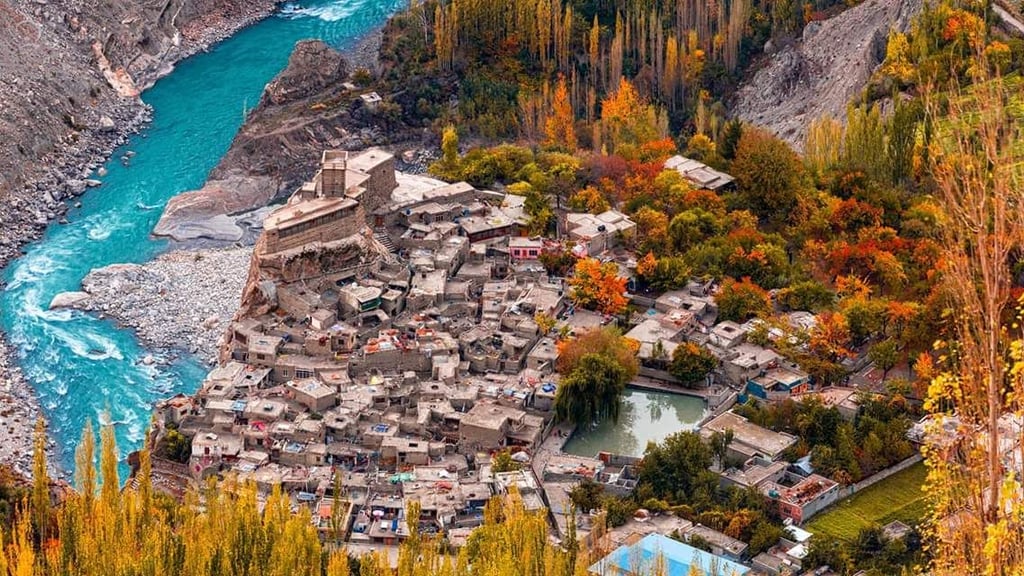
Heading north into the lush Hunza Valley, the cultural landscape shifts from stone carvings to soaring mud-and-timber fortifications. Hunza's history is deeply intertwined with its strategic position, ruled for centuries by independent Mirs (kings) who controlled the passes to Central Asia.
The iconic Baltit Fort, perched high above Karimabad, is a masterpiece of medieval Tibetan-influenced architecture. Built roughly 700 years ago, its wooden frames and mud-brick walls were designed to withstand both regional invasions and earthquakes. Walking through its narrow residential chambers, watchtowers, and old royal court offers an intimate look at feudal Burusho life. Down in the valley floor, the older Altit Fort stands guard over the old Silk Road route below.
What makes Hunza special, however, is that its heritage isn't trapped in the past. The local community has masterfully preserved its intangible culture from the unique, isolated Burushaski language to traditional musical performances featuring the daumal (drum) and surnai (flute), and the preservation of historic stone villages like Ganish.