
Northern Pakistan is one of the world’s ultimate trekking arenas. It is the dramatic convergence point of three major mountain ranges: The Himalayas, the Karakorams, and the Hindukush. This region boasts five of the world’s fourteen 8,000-meter peaks (including K2 and Nanga Parbat) and the densest concentration of high peaks and glaciers outside the polar regions.
Trekking here offers a massive diversity of landscapes, ranging from lush alpine pastures and juniper forests to stark, otherworldly glacial moraines.
Depending on physical fitness, time, and mountaineering experience, trekking options can be categorized into short, medium, and extensive routes.
TREKKING IN PAKISTAN
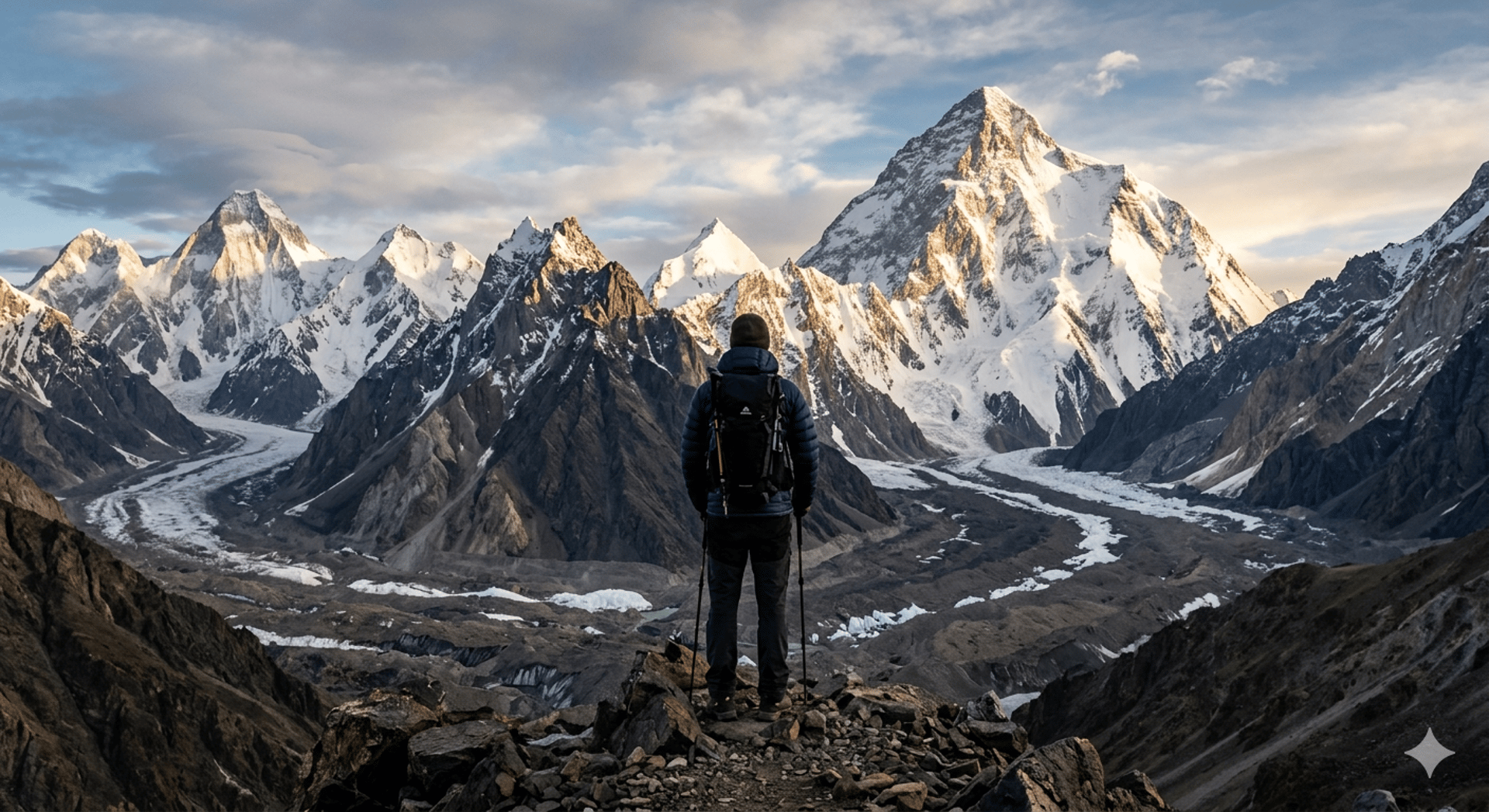
Fairy Meadows & Nanga Parbat Viewpoint
Fairy Meadows, called Jhel in the local Shina language, is a beautiful mountain area located at the base of Nanga Parbat, which is 8,126 meters tall and the 9th highest mountain in the world, part of the Himalayas. This place is famous for its green fields, thick pine trees, and a breathtaking view of a huge 4,000-meter high wall of ice and snow (called the Raikot Face). It's a must-visit spot for anyone traveling to Northern Pakistan.
Rakaposhi Base Camp
Rakaposhi is in the Nagar Valley and is known for its huge, straight rise that reaches 7,788 meters. From the Karakoram Highway, you can see a tall wall of rock and ice that goes up almost 6,000 meters, oneRephrase of the highest mountain walls in the world. Rephrase The hike to the base camp takes you through charming mountain villages and tall juniper forests, and then brings you right to the edge of a huge, noisy pile of ice and rock.
Short Treks
Best for: Beginners, families, or those short on time who still want epic vistas without heavy acclimatization.
These treks feature established trails, readily available local porters/guides, and basic lodge or structured camping options at the destination.
Rush Lake & Rush Peak
Rush Lake and Rush Peak represent the ultimate hidden gem for trekkers looking to get off the beaten path. Located in the Nagar Valley, Rush Lake is one of the highest alpine lakes in the world, sitting at a breathtaking 4,694 meters (15,400 feet). It is a high-altitude wilderness trek that rewards you with an incredibly rare prize: a 360-degree panoramic view of almost every major giant in the Karakoram range, including K2 on a perfectly clear day.
Naltar to Rattu (Pass Trekking)
The Naltar to Pakore (Ishkoman) Trek—frequently known as the Naltar Pass Trek—is a spectacularly diverse journey that crosses a high-altitude mountain gap at 4,600–4,710 meters.In the context of Northern Pakistan, Rattu typically refers to a well-known area in the Astore Valley near Nanga Parbat. However, the historic high-mountain pass trekking route out of Naltar Valley goes westward over the Naltar Pass to the village of Pakore in the Ishkoman Valley.
Medium Trekking
Best for: Regular hikers seeking a true wilderness experience, requiring decent stamina and basic altitude preparation.
These routes cross higher passes or venture onto moving glaciers, requiring full camping gear and a dedicated crew.
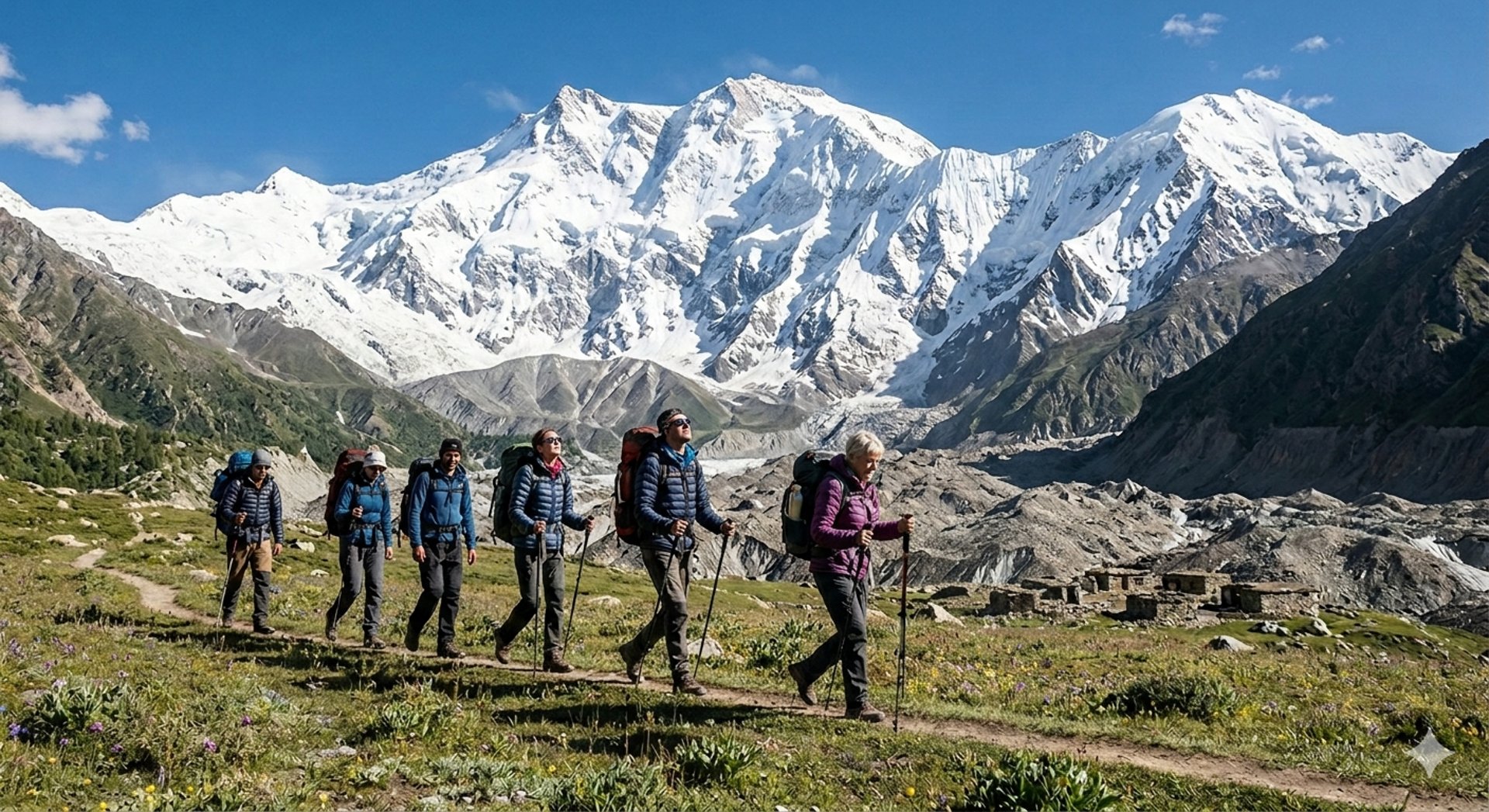
Baltoro Glacier & K2 Base Camp
If the previous options were day-hikes and short multi-day treks, the Baltoro Glacier to K2 Base Camp trek is the ultimate crown jewel of global mountaineering. This is not a casual holiday hike; it is an epic, multi-week expedition into the Karakoram’s brutal and magnificent core. The trek follows the 63-kilometer-long Baltoro Glacier; one of the longest non-polar glaciers on Earth, deep into the Central Karakoram National Park.
Snow Lake & Biafo-Hispar La
Biafo-Hispar La traverse via Snow Lake is an expedition into absolute, primal isolation.This traverse connects two legendary wildernesses: the Baltistan region and the Hunza Valley. By traveling up the 68 km-long Biafo Glacier and down the 49 km-long Hispar Glacier, you cross the greatest concentration of glacial ice outside of the polar ice caps. At their intersection lies Snow Lake (Lukpe Lawo)—a massive, high-altitude basin of pure snow and ice sitting at 4,870 meters, spanning over 16 kilometers wide.
Extensive Trekking
Best for: Experienced trekkers with high physical endurance, cold-weather resilience, and a desire to completely disconnect.
These are world-class, multi-week expeditions through unforgiving, remote glacier fields where emergency evacuation is difficult and self-sufficiency is key.