
Swat: The Uddiyana Chronicles
Long before it was nicknamed the "Switzerland of the East" for its snow-capped peaks and alpine meadows, Pakistan’s Swat Valley was known by a different name: Udyana, which translates beautifully to "The Garden." For over a millennium (from the 3rd century BCE to the 10th century CE), this lush valley was a foundational heartland of Gandhara Buddhism.
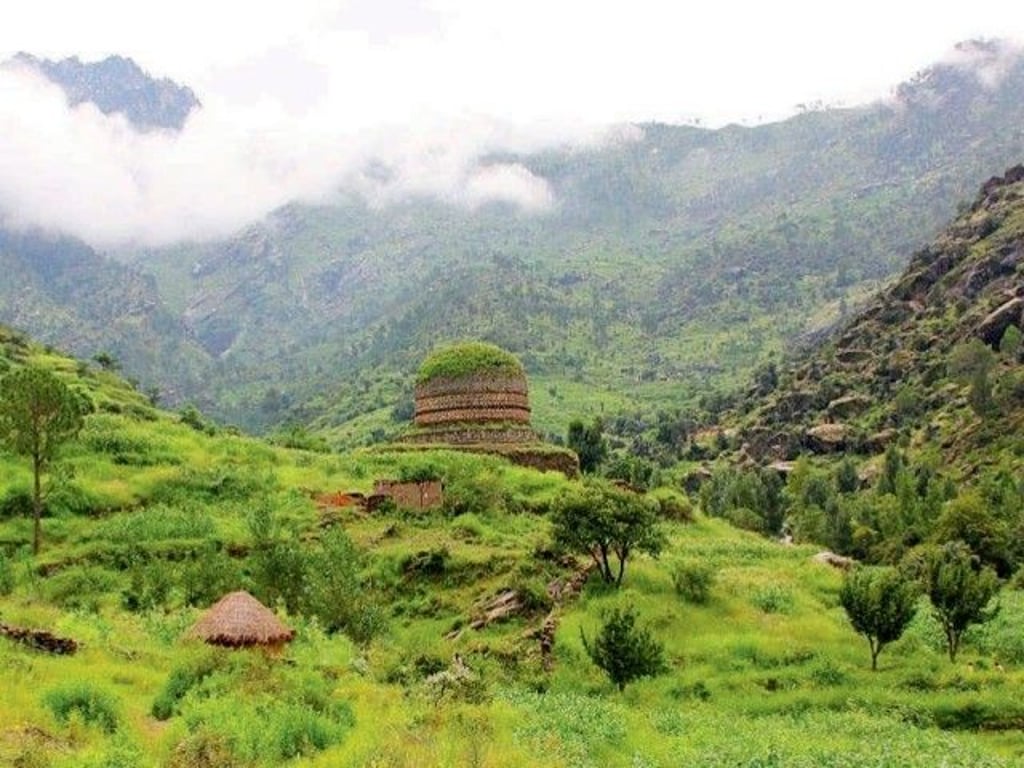
Long before it was nicknamed the "Switzerland of the East" for its snow-capped peaks and alpine meadows, Pakistan’s Swat Valley was known by a different name: Udyana, which translates beautifully to "The Garden." For over a millennium (from the 3rd century BCE to the 10th century CE), this lush valley was a foundational heartland of Gandhara Buddhism. It was a sacred landscape of over 1,400 monasteries, a major pilgrimage hub documented by Chinese travelers like Xuanzang, and the literal birthplace of Vajrayana (Tantric) Buddhism, pioneered by the great 8th-century master Padmasambhava.
If you want to travel Swat not just for the views, but to walk the ancient, spiritual paths of the monks and artisans who shaped Buddhist history, this guide is your map.
The Ancient Hubs: Lower Swat
The Mountain Sanctuaries: Sacred Architecture & Rock Carvings
Your journey into ancient Udyana begins in the lower valley, around the twin cities of Mingora and Saidu Sharif. This area contains the highest concentration of excavated monuments.
1. The Swat Museum (Saidu Sharif)
Why it matters: Do not skip this. It holds one of the world's most pristine collections of Greco-Buddhist art.
What to look for: Look closely at the stone carvings (mostly in local green schist). You will see the literal fusion of cultures: The Buddha depicted wearing Roman-style togas, surrounded by Greek Corinthian pillars, alongside local motifs and Indian narrative traditions. It gives you the context you need before visiting the ruins.
2. Butkara I Stupa (Mingora)
Why it matters: Dating back to the 3rd century BCE, this massive complex is believed to have been originally commissioned by Emperor Ashoka the Great.
The Experience: Walk the circular path (pradakshina) clockwise around the great main stupa, just as pilgrims did 2,000 years ago. The central dome was enlarged five times over the centuries. It is surrounded by a sea of over 270 smaller, ornate "votive stupas" donated by ancient nobility.
3. Saidu Sharif Stupa & Monastery
Why it matters: Perched serenely on a hillside where the Saidu and Jambil valleys meet, this site offers a perfect look at a structured monastic layout. You can clearly wander through the remains of the vihara (the monks' cells) and see the adjacent sacred area where the main stupa stands.
As you move along the valley flank, the monuments become more dramatic, built into the hillsides to foster quiet isolation.
1. Shingardar Stupa & Amluk Dara Stupa
Shingardar: Standing right by the main road near Barikot, this massive, dome-like monument is impossible to miss. It is one of the few stupas in the region where the original towering dome structure remains largely intact.
Amluk Dara: Tucked deeper into a valley at the foot of Mount Ilam, getting here requires a short trek through fields, but the reward is breathtaking. It is perhaps the most visually striking and remarkably preserved stupa in Pakistan, rising like a stone pyramid against a backdrop of rugged mountains.
2. The Giant Buddha of Jahanabad (Manglawar)
Why it matters: Carved directly into a high cliff face in the 7th century, this 7-meter-tall seated Buddha is a masterpiece of late Gandharan rock art.
The Story: The statue miraculously survived a targeted dynamite attack by militants in 2007. Restored with meticulous care by Italian archaeologists, the Buddha once again sits overlooking the valley, radiating an immense sense of peace and resilience.
Practical Tips for the Cultural Traveler
Respect the Sites: These are archaeological treasures and, to many, sacred spaces. Avoid climbing directly onto the delicate stone reliefs of the stupas or picking up loose stone fragments.
Hire a Local Guide: The history here is layered (Alexander the Great, Kushan kings, Hindu Shahis, and early Islamic empires all left footprints). A local guide of Archaeology will point out the subtle details; like hidden carvings of tigers or footprints of the Buddha, that you would otherwise miss.
Dress and Etiquette: Swat is a culturally conservative Pashtun region. Dress modestly (covering shoulders and knees) to align with local norms, and always ask before taking photos of local people.
The Sacred Mountain: If you look south from almost anywhere in lower Swat, you will see the jagged peaks of Mount Ilam. Long before Buddhism, it was a sacred site. For Buddhists, it is the mountain where the Buddha, in a past life, sacrificed his life for a single stanza of Dharma. Today, it stands as a silent sentinel over the ancient garden of Udyana.