
Seeking the Divine: A Traveler’s Guide to the Sufi Trail of Pakistan
Sufism, the spiritual inner side of Islam, is an important part of the culture and beliefs in Pakistan. For hundreds of years, mystics and poets roamed these areas, using music and poetry to bring people together with a message of love and acceptance for everyone, no matter their background.
Sufism, the spiritual inner side of Islam, is an important part of the culture and beliefs in Pakistan. For hundreds of years, mystics and poets roamed these areas, using music and poetry to bring people together with a message of love and acceptance for everyone, no matter their background. If you want to see this enchanting area, take a trip along the Sufi Trail in Punjab and Sindh. You will enjoy beautiful buildings, captivating music, and a deep sense of calm.
1. The Heart of Punjab: Data Darbar (Lahore)
Just outside the old Walled City of Lahore, Data Darbar is the burial place of Hazrat Ali Hujwiri, who is kindly known as Data Ganj Bakhsh, meaning "the giver of treasures. " It is one of the oldest and most popular Sufi shrines in South Asia, dating back to the 11th century.
The feeling here is strong. The large white marble courtyard is always filled with worshippers.
Don't forget: Thursday evenings. This is when the shrine becomes lively with moving live Qawwali (Sufi devotional singing) that can be heard late into the night.
Travel Tip: Wear respectful clothes, cover your head, and be ready to take off your shoes at the entrance.
2. The City of Saints: Multan
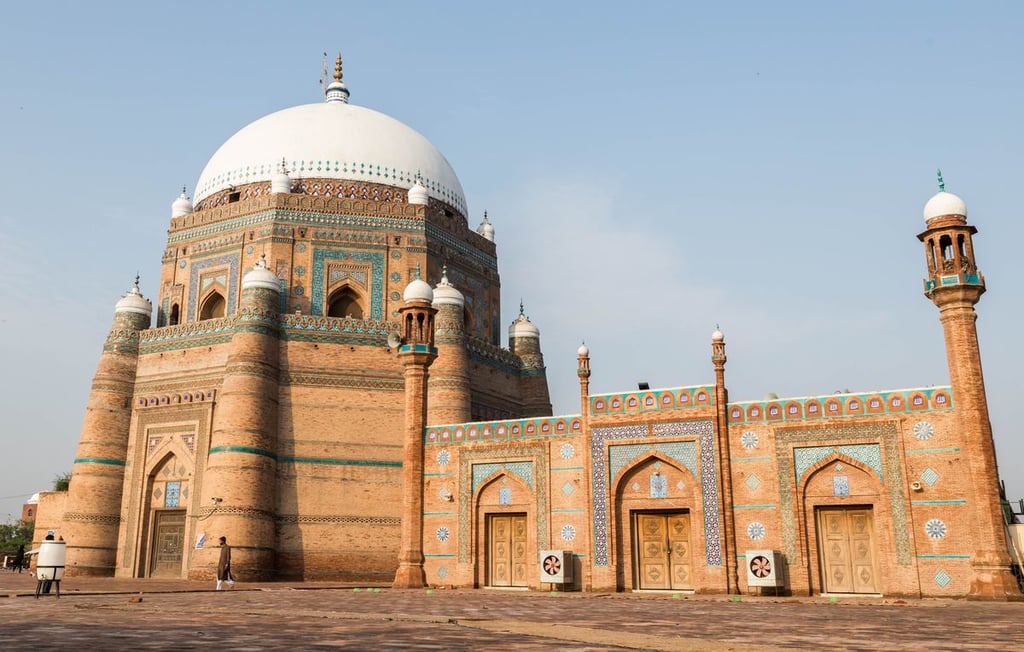
Multan is known for its tall Sufi tombs that have blue tiles and stand out in the city's skyline. They are important both in appearance and in the culture of the city. There are two main shrines on top of the old fort hill:
Shrine of Shah Rukn-e-Alam: An example of early Islamic building design. It has a large, three-layered octagon shape with a stunning round dome on top. The brickwork, mixed with bright blue and white shiny tiles, is beautiful.
Shrine of Bahauddin Zakariya: A little walk away is the burial place of Rukn-e-Alam's grandfather, who was an early leader of the Suhrawardiyya Sufi group in the region.
3. Ecstatic Devotion: Lal Shahbaz Qalandar (Sehwan Sharif, Sindh)
If Lahore has beautiful music and Multan has impressive buildings, Sehwan Sharif is all about joyful worship. This shrine, with its golden dome, honors Lal Shahbaz Qalandar, a philosopher and saint from the 13th century. It is a place that welcomes everyone.
The Experience: Every evening, especially on Thursday nights, many people come together for the Dhamaal. This is a spiritual dance that happens to the loud and rhythmic sound of big dhol drums. It is a bright mix of smells from incense, flowing red robes, and a feeling of joy and spirituality.
4. The Poetic Haven: Shah Abdul Latif Bhittai (Bhit Shah, Sindh)
Sitting on a sand hill in the countryside of Sindh, this beautiful shrine is dedicated to Shah Abdul Latif Bhittai, the area's most loved saint and poet.
The atmosphere here is very calm, which is a big change from the lively energy of Sehwan. Every day, traditional musicians sit outside and play the Tamboorah, a string instrument made by Bhittai. They sing his poems from the Shah Jo Risalo. The poems talk about love from a higher power, being accepting, and how people can come together.