
Exploring Taxila: A Traveler's Guide to the Cradle of Knowledge
Imagine a place where Alexander the Great paused his conquests to debate philosophy, where the world’s very first international university flourished, and where the distinct blending of Greek and Indian artistry gave birth to Gandharan art. Just an hour’s drive from Pakistan's capital, Islamabad, lies Taxila.
Imagine a place where Alexander the Great paused his conquests to debate philosophy, where the world’s very first international university flourished, and where the distinct blending of Greek and Indian artistry gave birth to Gandharan art. Just an hour’s drive from Pakistan's capital, Islamabad, lies Taxila. A massive, UNESCO-listed archaeological landscape that earned its reputation as the ancient world's ultimate "Cradle of Knowledge."
Whether you are a seasoned history buff or a curious traveler looking for an unforgettable day trip, this guide covers everything you need to know to experience the magic of Taxila.
The Must-Visit Stops in Taxila
Plan Your Visit: Logistics at a Glance
1. The Taxila Museum
Start your day here to get your bearings. The museum holds one of the most significant collections of Gandharan Buddhist art in the world. Look closely at the stone and stucco Buddha sculptures, you will notice distinct Hellenistic features like wavy hair, realistic muscle definitions, and Roman-style togas, a fascinating visual footprint left behind by Alexander the Great’s legacy.
2. Dharmarajika Stupa
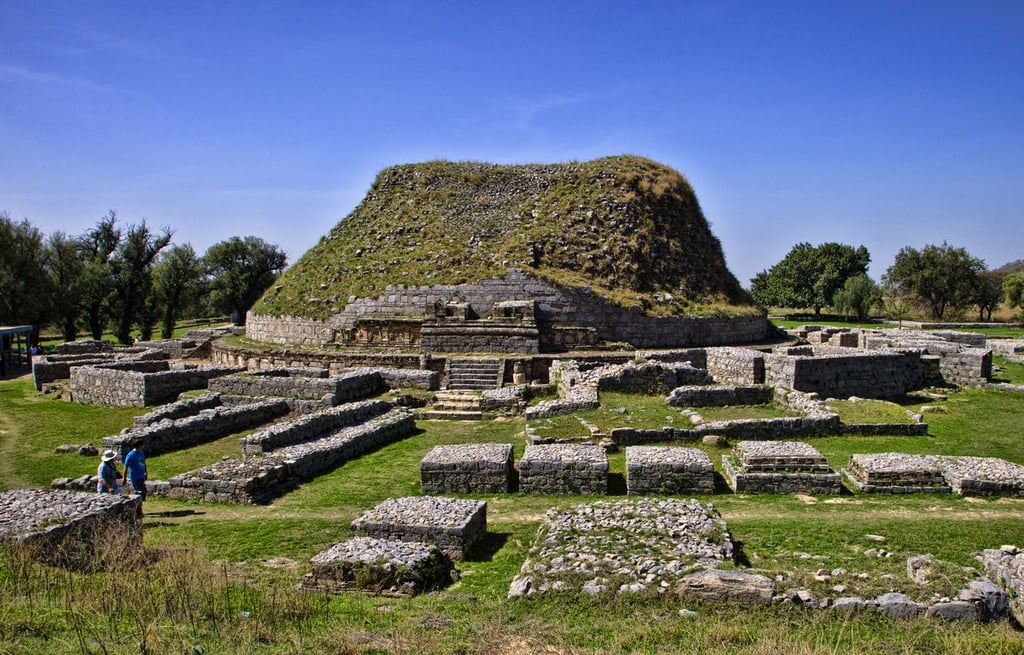
Dharmarajika is a grand, circular stupa established by the Mauryan Emperor Ashoka in the 3rd century BCE. It was built to house sacred relics of the Buddha. Walking the circular path around the great mound gives you a quiet sense of the spiritual gravity this place held for thousands of pilgrims who traveled thousands of miles across Asia just to pray here.
3. Jaulian Monastery
Perched on a quiet hill, Jaulian is an exceptionally well-preserved 5th-century monastic complex. It features a main stupa surrounded by smaller votive stupas, healing pools, assembly halls, and the tiny stone cells where monks lived, studied, and meditated.
Getting There: 1 hour drive (35 km) from Islamabad via the Grand Trunk (GT) Road or the M-2 Motorway.
Best Time to Visit: October to March. Summer temperatures can easily soar past 40°C (104°F), making outdoor exploration grueling.
Ideal Time Needed: 4 to 6 hours for a comprehensive tour of the museum and top 2-3 sites.
What to Bring: Comfortable walking shoes (for unpaved paths), a hat, sunscreen, and plenty of water.
Traveler's Tip: To unlock the real stories behind the stones, hire an official, licensed guide for the Taxila Museum. They can point out subtle details, like ancient stone drainage channels or hidden carvings, that you would completely miss on your own.